I sat in the barber chair three years ago and asked for “the same thing as last time, just a bit shorter.” Classic mistake. I walked out looking like my head had been swapped onto someone else’s body. Same haircut, same barber, same scissors — but somehow it looked completely wrong.
It took me embarrassingly long to figure out why. My face had changed. I’d lost some weight, my jawline was sharper than it used to be, and the haircut that worked for “old me” just didn’t sit right on “current me” anymore. That’s when a barber in Lahore — an older guy who’s been cutting hair for probably thirty years — told me about something he called the “two and a quarter rule.” He didn’t make it sound fancy. He just said: “Your hair length should match your jaw, not just your head.”
That one sentence changed how I think about haircuts entirely.
So What Actually Is This 2.25 Rule?
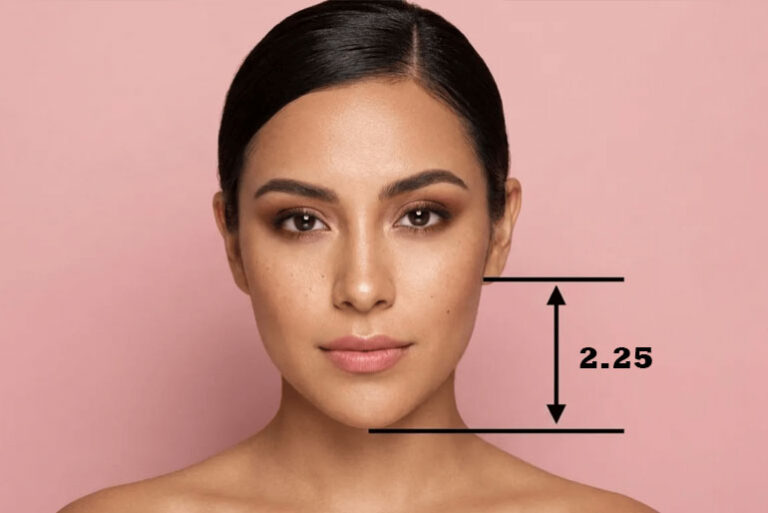
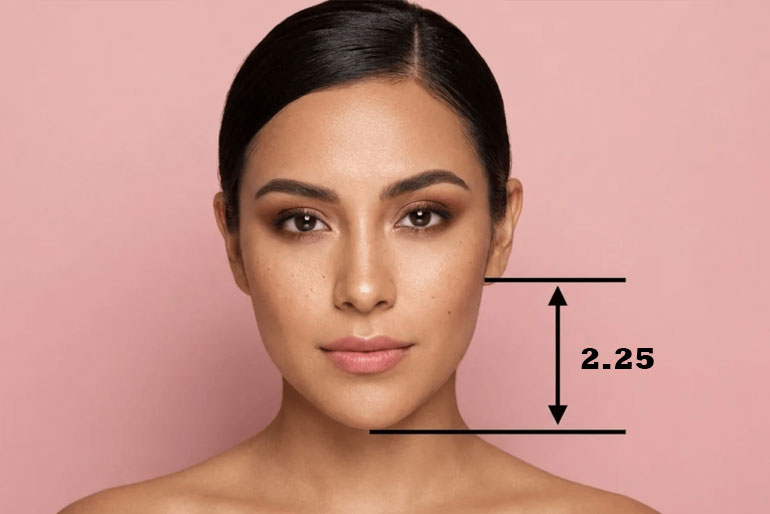
Here’s the simple version. The rule says that the length of your hair (specifically how far it extends past certain points on your head, like the sides or the front) should be roughly 2.25 times some reference measurement on your face — usually tied to your jawline width or the distance from your hairline to your jaw.
I’m not going to pretend this is some scientifically peer-reviewed formula. It’s more of a styling guideline that experienced barbers and stylists use to figure out proportion. Think of it less like a math equation and more like a tailor’s rule of thumb for hemming pants — it’s a starting point, not gospel.
The core idea is proportion. A haircut that’s “technically good” can still look off if it doesn’t balance with your jaw, your face shape, and how wide or narrow your features are. The 2.25 ratio is basically a way to stop guessing and start measuring.
Why I Actually Started Caring About This
I used to think haircuts were just “good” or “bad” based on whether I liked the photo on Instagram. Turns out that’s exactly backwards. A style that looks amazing on a guy with a narrow jaw and high cheekbones can look completely deflated on someone with a wider, more square jaw — even if the actual haircut is identical.
I learned this the hard way trying to copy a fade I saw on a guy with a very angular face. I have a rounder jaw. Same haircut, same fade height, completely different result. On him it looked sharp and intentional. On me it looked like my head was just… wider. Like the haircut was fighting my face instead of working with it.
That’s the whole point of checking jawline-to-length proportion before you commit to a style.
How to Actually Measure It Yourself
You don’t need fancy tools. Here’s what I do now before any haircut, and it takes about two minutes.
Step 1: Measure your jaw width.
Stand in front of a mirror, or better, take a front-facing photo with your phone (no filters, neutral lighting). Use a soft measuring tape or even a piece of string to measure from one side of your jaw to the other, at the widest point. Write that number down in centimeters or inches — doesn’t matter which, just stay consistent.
Step 2: Measure your face length.
Measure from your hairline (where your forehead starts) down to the bottom tip of your chin. This is your vertical face length.
Step 3: Do the math.
Divide your face length by your jaw width. If you’re landing somewhere close to 2.25, your face is considered fairly balanced in the classic proportion sense (some barbers call this an “oval-leaning” face). If your number is lower, your face reads wider or rounder. If it’s higher, your face reads longer or narrower.
Step 4: Match your haircut length to that ratio.
This is the part most guys skip, but it’s the actual useful bit. If your ratio is under 2.25 (wider/rounder face), you generally want more length and height on top, and less bulk on the sides — this visually “stretches” your face. If your ratio is over 2.25 (longer/narrower face), you usually want more width and texture on the sides, and less height on top, so your head doesn’t look like it’s stretching even more.
I used a basic tailor’s tape measure from a sewing kit my mom had lying around. You really don’t need anything special — a flexible measuring tape works better than a rigid ruler since it follows the curve of your jaw.
My Honest Mistakes With This
When I first tried this, I overcorrected hard. My ratio came out lower than 2.25, so I told my barber “give me max height, nothing on the sides.” Big mistake. I ended up looking like I was trying too hard, like the haircut had a personality of its own that had nothing to do with my actual face. The lesson here: the rule tells you a direction to lean, not a license to go extreme.
Second mistake — I measured once, right after getting out of bed, with my hair pushed weirdly to one side, and the numbers were off. Measure with damp or wet hair pushed back, or better yet, no hair styling at all, so you’re getting your actual face shape and not a hair-distorted version of it.
Third one, and this is honestly the most common mistake I see other guys make too: they apply this rule and ignore literally everything else — hair texture, hair density, cowlicks, how their hair grows naturally. The 2.25 rule is a guideline for proportion. It doesn’t account for the fact that your hair might do its own thing regardless of what the “ideal” length should theoretically be.
Real Example: Me vs. My Brother
My younger brother and I have noticeably different face shapes. His ratio comes out closer to 2.5 — longer face, narrower jaw. Mine sits around 2.1, more square and compact.
When we both tried to get the same textured crop style (because it was trending and we both liked how it looked online), his version looked clean and proportionate. Mine looked top-heavy, like my head had extra volume it didn’t need.
Once I adjusted — kept the top shorter, added a slight taper on the sides to add width visually instead of height — it looked dramatically better. Not because the haircut itself was bad, but because I was applying it to the wrong proportion.
How to Bring This Up With Your Barber Without Sounding Weird
You don’t need to walk in holding a measuring tape and quoting ratios like you’re auditioning for a math competition. Just say something like:
“I think I have a wider/squarer jaw, so I want something that adds a bit of height without making my face look wider.”
Most good barbers immediately understand what you’re asking for, even if they’ve never heard the term “2.25 rule” specifically. They’re trained to think in proportion even if they don’t label it that way.
If you want a more visual approach, apps like FaceApp or even just basic photo editing apps can help you preview different hair lengths on your own face before you commit. I’ve also seen people use ChatGPT or Claude with an uploaded photo just to get a second opinion on face shape — not for the haircut decision itself, but as a sanity check before walking into the salon.
Common Mistakes to Avoid
Don’t measure with styled or product-heavy hair — it skews the numbers.
Don’t treat 2.25 as a strict rule you must force your haircut into. It’s a reference point, not a hard requirement.
Don’t ignore your hair’s natural texture and growth pattern. Curly hair, fine hair, and thick coarse hair all respond differently to the same length, even with identical face ratios.
Don’t copy a haircut purely because it looked good on someone else’s face. Check their proportion against yours first.
Don’t skip showing your barber a reference photo and explaining your face shape concern — communication matters more than the measurement itself.
Final Thoughts
Honestly, I don’t measure my jaw every single time I get a haircut now. After doing it a few times, you start to just know your proportions instinctically — what works, what doesn’t, what to ask for. But the first few times you do it, it genuinely changes how you think about haircuts. It moves you from “I hope this looks good” to “I know why this will look good.”
If you’ve ever left a barbershop feeling like the haircut was fine but somehow not quite right, there’s a good chance proportion was the missing piece, not the technique. Grab a measuring tape, do the quick math, and bring that insight with you next time you sit in the chair. Your barber will probably appreciate that you’ve actually thought about it instead of just pointing at a photo and hoping for the best.