
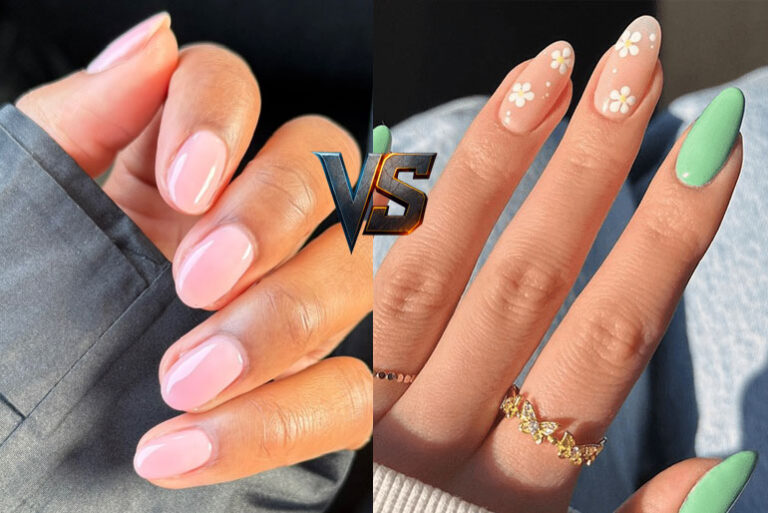
I broke a nail on a Tuesday morning trying to open a can of cat food, and that one stupid moment sent me down a rabbit hole that lasted about three months. Three different salons, two ruined sweaters from acetone drips, and one very awkward conversation with a nail tech who clearly thought I was overthinking a manicure. I wasn’t. I just really wanted to know which one was actually worth my money.
So let’s get into it, because I’ve now had both dip powder and gel nails on my hands long enough to have opinions, scars (not literally, but close), and a system that actually works for my lifestyle.
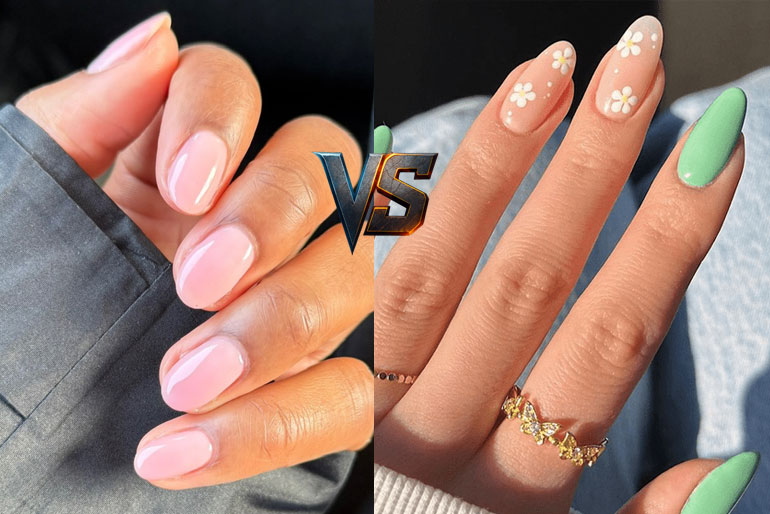
What These Two Things Actually Are
Before the comparison, a quick reality check, because I genuinely didn’t know the difference going in.
Gel nails are a polish-like formula that gets cured under a UV or LED lamp. Each layer — base, color, top coat — gets zapped under the light for somewhere between 30 seconds and 2 minutes. It’s basically nail polish that’s been bullied into hardening instantly by light instead of air.
Dip powder is a different beast entirely. Your nails get a base coat brushed on, then you literally dip your fingertip into a jar of colored powder (or your tech does it for you), tap off the excess, and repeat that two or three times. No lamp involved. It air-dries and hardens through a chemical reaction, kind of like how those instant cold packs work when you snap them.
I assumed they’d feel pretty similar once they were on. They don’t.
My First Real Test: A Friend’s Wedding
I had my first dip powder set done for a friend’s wedding because my regular gel girl was booked solid that week. The salon I went to (a place near my apartment, nothing fancy) used the SNS dip system, which I later learned is one of the more reputable brands in that space.
The process took almost an hour and twenty minutes. Longer than I expected. My nails felt thick afterward, almost like tiny shields on my fingertips. Honestly my first thought was “these feel bulletproof,” and that turned out to be pretty accurate.
That set lasted me five weeks. Five. I only took it off because the regrowth gap was starting to look a little rough, not because anything chipped or lifted.
Compare that to my usual gel sets, which start showing wear around the 10-12 day mark for me, usually right at the tips where I type all day.
Then I Went Back to Gel and Remembered Why I Liked It
After the wedding, I went back to my regular tech for a gel fill. And almost immediately I remembered the thing I liked about gel that dip doesn’t really offer: the shine.
Gel nails have this glassy, wet-look finish that just looks more “done” to me. Dip powder, even with a glossy top coat, tends to look a little more matte or slightly cloudy unless your tech finishes it really well. Some salons buff dip to a shine that rivals gel, but it depends heavily on the technician’s skill, which brings me to a mistake I made early on.
The Mistake That Cost Me $40 and a Lot of Annoyance
I went to a budget salon for a dip fill because it was cheaper, and the tech didn’t seal the edges properly. Two days later, water got underneath the product near my cuticle on my ring finger, and the whole thing started lifting like a sticker peeling off a water bottle.
Lesson learned: dip powder is way more dependent on application technique than gel is. If the base coat isn’t applied edge-to-edge correctly, moisture sneaks in and lifts the whole thing. Gel is a little more forgiving because each layer cures instantly under the lamp, so there’s less room for human error during the “drying” phase.
If you’re going to get dip done, ask your tech specifically if they seal the free edge (the tip of your nail). The good ones do this automatically. If they don’t, that’s your sign to find someone else next time.
Step-by-Step: What Actually Happens During Each Process
Gel Nails:
- Nails get pushed back (cuticle work) and shaped
- A dehydrator and primer go on to help everything stick
- Thin layer of base gel, cured under the lamp
- Color gel applied in 2 thin coats, each cured separately
- Top coat applied and cured, then wiped with alcohol to remove the sticky residue
Dip Powder:
- Same prep — cuticles pushed back, nails shaped and buffed slightly for grip
- A bonding base coat (sometimes called “Sealer Protein Bond” depending on the brand) goes on
- Nail gets dipped into the powder, excess tapped off
- This repeats 2-3 times to build thickness and even color
- Activator liquid is brushed on to harden everything, then it gets shaped and buffed
- A top coat finishes the look, sometimes cured, sometimes just air-dried depending on the brand
Knowing this sequence actually changed how I judge a good salon visit. If they’re rushing through the dipping step or skipping the activator, the set won’t last.
What About Removal? Because This Part Matters More Than People Admit
This is where I have actual fence-related opinions.
Gel removal, done correctly, involves filing off the top shine, wrapping nails in acetone-soaked cotton with foil, and waiting about 10-15 minutes before gently scraping it off. Done wrong (picking it off yourself at 11pm while watching Netflix, no judgment, we’ve all done it), it takes layers of your natural nail with it.
Dip powder removal takes longer in the chair — sometimes 20-25 minutes of soaking — because the layers are thicker. But because it’s powder-based, when it’s done right, it tends to come off in a way that feels less damaging. Less “ripping,” more “dissolving.”
I will say, my natural nails looked healthier after a year of mostly dip versus a year of mostly gel. Thinner, yes, but not as flaky or brittle. That’s purely my own experience though, not a universal rule — it really depends on how often you’re getting fills versus full removals.
Real Cost Comparison (From My Own Receipts)
In my city, gel manicures run somewhere between $35-$50, with fills around $30 if you go back within 2-3 weeks.
Dip powder sets run a bit higher initially, $45-$60, but because they last longer, the cost per week actually ends up lower. I did rough math on this once out of curiosity: over a 10-week period, I spent less total money on dip (two fills) than I would have on gel (needing three separate fill appointments).
If you’re someone who gets your nails done because you genuinely enjoy the ritual of it, gel’s frequent appointments might actually be a feature, not a bug. If you want to “set it and forget it,” dip wins on the math.
Who Should Pick Which (Based on Actual Use, Not Just Theory)
If you work with your hands a lot — cooking, gardening, gym stuff, parenting a toddler who grabs everything — dip’s durability is genuinely noticeable. I noticed way fewer chips during a camping trip when I had dip on versus a beach trip a few months earlier when I had gel.
If you care more about the glossy, salon-fresh look and don’t mind touch-ups, gel is still hard to beat aesthetically. It also allows way more creative freedom — gel-X extensions, intricate nail art, ombré effects — because the product itself is more workable in liquid form before curing.
If you have sensitive skin or eyes, one practical note: gel curing lamps emit UV light, similar to a much weaker version of tanning bed UV. Dip skips the lamp entirely, which some people prefer for that reason alone.
A Few Mistakes to Avoid With Either One
Don’t go more than 3 weeks without a fill on either system if you can help it. Once the gap between your cuticle and the product gets too wide, you’re more likely to snag it on something and rip the whole nail back.
Don’t pick at lifting edges. I know it’s tempting. I have absolutely done this. It almost always takes a chunk of your real nail with it.
Don’t skip cuticle oil between appointments. This sounds like an upsell line salons use, but it genuinely extends wear time for both gel and dip because it keeps the surrounding skin from drying out and pulling at the edges.
Don’t assume cheaper automatically means worse, or pricier automatically means better. Some of my best dip sets came from a no-frills strip mall salon, and one of my worst gel experiences came from a place that charged premium prices and clearly wasn’t using fresh gel polish (it was gummy and didn’t cure right, which is its own red flag worth knowing about).
So Which One’s Actually Better?
Honestly? It depends on what you’re optimizing for. If durability and lower appointment frequency matter most, dip has consistently outperformed gel in my own experience. If shine, flexibility for nail art, and that classic glossy finish matter more, gel still has the edge.
I’ve landed somewhere in the middle now. I do dip during busy seasons — work travel, family stuff, anything where I genuinely won’t have time for upkeep — and switch to gel when I have more bandwidth to enjoy fresh nail art every couple weeks.
Try both if you haven’t. Pay attention to how your own nails react, because mine clearly have preferences that someone else’s might not share. That’s really the only way to know which one earns a permanent spot in your routine.