
Nobody warned me. That’s the honest truth.
I remember standing in my bathroom around week 6, getting dressed for work, and suddenly nothing fit. Not just my jeans — my bra. The one I’d worn for two years. The one I’d bought in my “correct size” after a proper fitting. It felt like it belonged to someone a full size smaller than me. And it wasn’t even 7 AM yet.
That’s when I fell down the rabbit hole of pregnancy bra sizing — and I’m still kind of in it. If you’re pregnant and staring at your underwear drawer, wondering what’s happening to your body, this guide is for you. No fluff, no vague advice. Just what actually happens, trimester by trimester, and what I wish someone had told me.
Why Your Bra Size Changes So Dramatically
Before we get into the trimester breakdown, here’s the quick version of why this happens.
Your body starts preparing for breastfeeding almost immediately after conception. Hormones like estrogen and progesterone flood your system, causing the glandular tissue in your breasts to grow and your milk ducts to expand. Meanwhile, increased blood flow causes swelling and extra tenderness. Your ribcage also physically expands (especially later in pregnancy) to make room for your growing uterus, which affects your band size even if your cup size levels off.
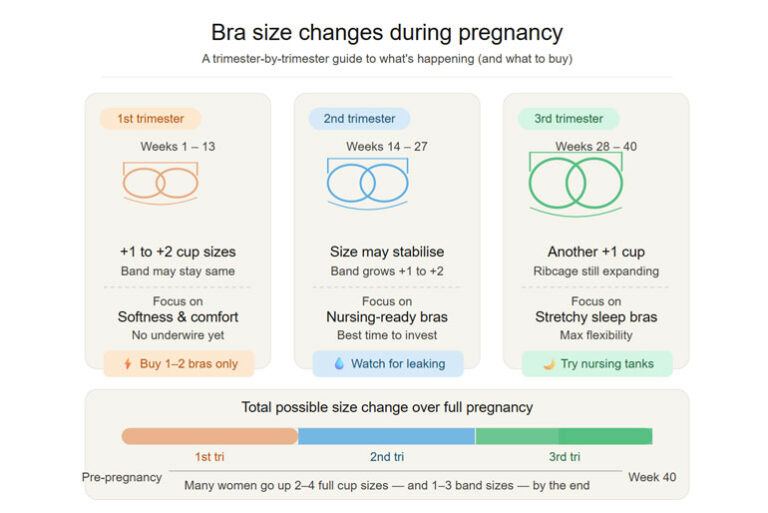
The result? A lot of women go up two, three, even four cup sizes over the course of 40 weeks. And your band size can jump up 2–3 numbers too.
This isn’t vanity sizing or water retention that goes away. It’s structural change. And it happens in waves.
First Trimester (Weeks 1–13): The Sneaky Early Growth
Most people expect the big changes to happen later. They don’t. For a lot of women, the first trimester is actually one of the most dramatic periods for breast changes — partly because it catches you so off guard.
What typically happens:
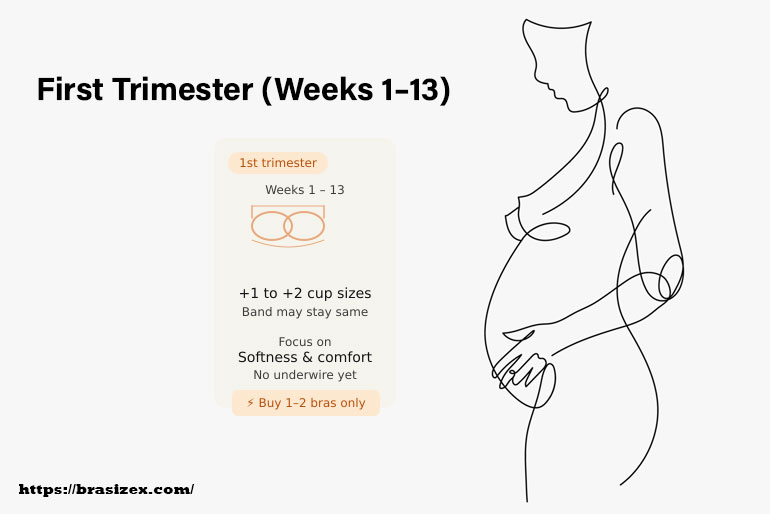
Your breasts can start feeling fuller and heavier within the first few weeks. Tenderness is usually the first sign — even before a missed period for some women. By weeks 6 to 10, you might already be spilling out of your current bra.
The cup size usually goes up first. The band size might stay the same for now, but don’t count on it.
Practical tip:
Don’t go out and buy a ton of bras right now. I made this mistake. I bought three beautiful maternity bras in week 8, feeling very organized and prepared. By week 16 they were already too small. Buy one or two comfortable options to get through the first trimester — focus on comfort over anything else.
Look for bras with stretch lace or fabric panels, wider straps, no underwire (underwire can dig into breast tissue that’s changing rapidly), and multiple hook-and-eye closures so you can adjust as you grow.
My mistake: I kept wearing my old underwire bra “just for a few more weeks” because I didn’t want to spend money. My breasts were sore for days. Just let go of the old bra. It’s not worth it.
How to Actually Measure Yourself During Pregnancy
Here’s the thing about measuring your bra size while pregnant — the usual methods still work, but you need to re-do them more often than you think.
Step 1: Measure your band size. Wrap a soft measuring tape around your ribcage, just under your bust. Keep it snug but not tight. If you get an odd number, round up to the nearest even number. That’s your band size.
Step 2: Measure your bust. Measure around the fullest part of your chest, keeping the tape level. Don’t pull it tight — let it sit naturally.
Step 3: Calculate your cup size. Subtract your band size from your bust measurement. Each inch is roughly one cup size (1″ = A, 2″ = B, 3″ = C, and so on).
Step 4: Try things on. This is non-negotiable. Measurements are a starting point, not the final answer. Different brands, different fabrics — they all fit differently.
Apps like ThirdLove and True&Co have fit quizzes that can help you narrow things down, and both have been genuinely useful for figuring out the right starting point when you’re changing sizes every few weeks.
Second Trimester (Weeks 14–27): The Stable(ish) Middle
Most women get a bit of a breather here — or at least a slowdown.
Breast growth usually levels off somewhat in the second trimester. The rapid early changes calm down, and you might actually find a bra that fits for more than six weeks. (Enjoy this.)
What typically happens:
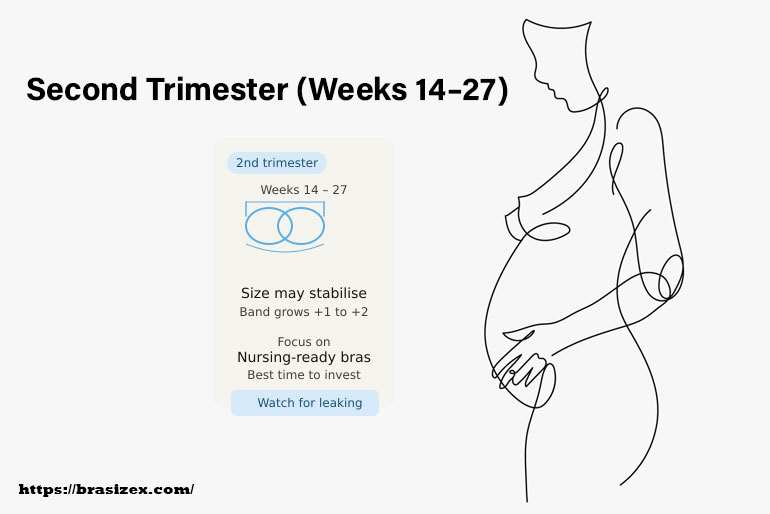
Your band size may start increasing now as your ribcage begins to expand. Even if your cup size stays steady, you might find your band feeling tight. This is normal. It doesn’t mean you’re doing anything wrong.
This is also the trimester when a lot of women start experiencing leaking — yes, already. Your body might start producing colostrum (early breast milk), which can cause light spotting on your bra. This is completely normal but worth knowing ahead of time so you don’t panic.
What to buy:
This is actually the best time to invest in a few quality maternity bras that’ll carry you through the rest of the pregnancy and into early breastfeeding. Look for:
- Soft cup bras (no underwire)
- Nursing-compatible designs — many have drop-down cups that work post-delivery too
- Bralettes for sleeping, because wearing a regular bra 24 hours a day is exhausting
Brands like Kindred Bravely, Bravado Designs, and Cake Maternity get recommended constantly in pregnancy forums — and for good reason. They actually account for the fact that your shape is changing, not just your size.
One thing I got wrong: I kept buying “maternity bras” in my usual style — kind of structured, slightly padded. What I actually needed was softness and support without compression. Padded cups can actually press on breast tissue in a way that’s uncomfortable and (some lactation consultants say) potentially problematic for milk duct development. Soft fabric, good support, minimal structure.
Third Trimester (Weeks 28–40): The Final Push (Literally)
This is where your ribcage really expands. Your diaphragm is being pushed up by your growing baby, and your whole torso is wider. Band sizes that were fine in the second trimester might be uncomfortably tight by week 35.
What typically happens:
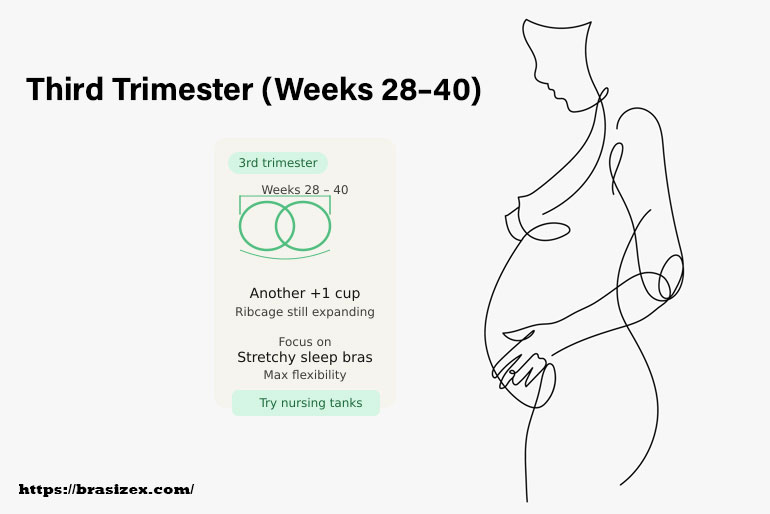
Expect another jump in cup size and possibly in band size. Some women who were a 36C before pregnancy find themselves in a 38E or 40F by the third trimester. That’s not unusual. It can feel alarming when you look at the tag, but the sizing is the sizing — don’t let the letters on a bra label mess with your head.
Your breasts may also feel heavier and harder at times, especially closer to your due date, as your body ramps up colostrum production.
What to wear:
Comfort is everything now. Sleep bras become your best friend — light, non-compressive, made from breathable fabric. Many women switch to nursing tanks (bra-top camisoles) full-time in the third trimester because they’re softer, more flexible, and double as a layer of clothing.
If you’re still going to an office or social events and want actual support, look for wireless bras with wide underbands and adjustable straps. The band adjustment matters as much as the cup — you want to be able to let it out after a big meal or if you’re swollen by the end of the day.
Common Mistakes to Avoid
Buying too many of one size. You’ll outgrow it faster than you think. Buy a few comfortable options, wear them until they’re uncomfortable, then reassess.
Sticking with underwire too long. I hear from so many women who did this because they missed how their old bras looked. The tenderness and potential impact on developing breast tissue just isn’t worth it.
Ignoring fit because “it’s just temporary.” An ill-fitting bra during pregnancy can cause back pain, neck tension, and skin irritation. These things feel worse when you’re already exhausted and carrying extra weight.
Not accounting for post-birth changes. Your breast size will change again after delivery — especially once your milk comes in (usually 3–5 days after birth). If you’re planning to breastfeed, buy nursing bras toward the end of your third trimester but leave room for another size jump postpartum.
Measuring yourself just once. Measure every 4–6 weeks, especially in the first and third trimesters. Set a reminder in your phone.
A Quick Reference: What to Expect, Size-Wise
| Trimester | Cup Change | Band Change | What to Focus On |
|---|---|---|---|
| First | +1 to +2 cups | May stay same | Comfort, softness, no underwire |
| Second | May stabilize | +1 to +2 band sizes | Invest in good nursing bras |
| Third | Another +1 cup | +1 to +2 more | Stretchy fabrics, sleep bras |
These are generalizations — everybody is different. Some women stay relatively stable in size. Others go up six cup sizes total. Both are normal.
Final Thoughts
Looking back, what I wish someone had told me is this: treat bra shopping during pregnancy like you’d treat any gear upgrade. You don’t buy one pair of shoes for a multi-month hike without knowing your feet will change on the trail. You check in, you adjust, and you prioritize function over aesthetics for a while.
It’s not forever. Your body is doing something genuinely remarkable, and your bra size is just one sign of it. But taking it seriously — actually getting measured, actually buying comfortable sizes — makes a real difference in how you feel day to day.
And if you’re standing in your bathroom at 6 AM, wondering why nothing fits? You’re not imagining it. You probably need a new bra. Go get one.
Have questions about specific brands or fit issues? Drop a comment — I’ve tried more maternity bras than I care to admit, and I’m happy to share what actually worked.