So here’s a situation I bet you’ve been in: you’re standing in your bedroom, you’ve just tossed out a bra that’s been digging into your ribs for six months, and you finally decide — today is the day I’m going to figure out my actual size. You open a browser tab, find a guide that says “grab a measuring tape,” and then realize you have absolutely no idea where yours is.
That was me about two years ago. Moving to a new apartment had swallowed my tape measure somewhere between the kitchen drawer and a box labeled “miscellaneous stuff I can’t categorize.” I wasn’t about to wait a week for a new one to arrive. I needed a bra. I needed to know my size. And I figured there had to be another way.
Turns out, there are several. Some work surprisingly well. Some are… let’s say, educational in the sense that they teach you what not to do.
Here’s everything I learned, laid out so you don’t have to fumble around the way I did.
Why Getting Your Size Right Actually Matters
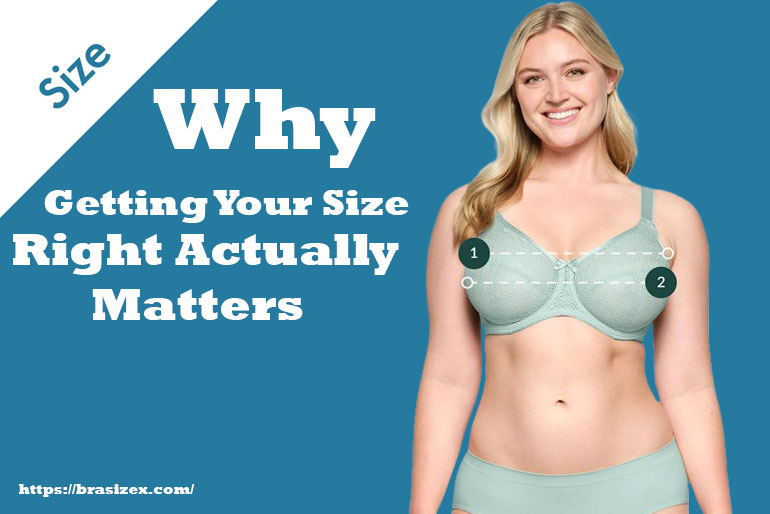
Before getting into the how, a quick note on the why — because a lot of people (myself included, for an embarrassingly long time) just grab whatever size “feels close enough” and deal with the consequences.
A poorly fitting bra causes back pain, shoulder grooves, skin irritation, and posture issues over time. Studies from lingerie brands and independent fitters consistently show that somewhere between 70–80% of women are wearing the wrong bra size. That’s not a small thing. And the wrong size almost always comes from a bad measurement — or no measurement at all.
So yes, even if you don’t have a tape measure, it’s worth taking a few extra minutes to get this right.
Method 1: Use a Strip of Paper or String
This is the one that actually saved me that day, and honestly, it’s more accurate than people expect.
What you need: A strip of paper (like from a notepad), or a piece of string/ribbon. A ruler, or even a printed ruler from the internet. A pen.
Here’s how to do it:
Start by measuring your band size — that’s the number in your bra size (like 34 in 34C).
Wrap the strip of paper or string snugly around your ribcage, just under your bust. Keep it horizontal. Mark where it meets itself, then lay it flat against a ruler. This number is your underbust measurement in inches.
Now here’s where most guides complicate things unnecessarily. The general rule:
- If the measurement is an even number, that’s likely your band size
- If it’s odd, round up to the next even number (so 33 inches = 34 band)
Next, measure your bust — wrap the paper or string around the fullest part of your chest, usually at nipple level. Don’t compress anything. Mark it, measure it.
Subtract your band measurement from your bust measurement. The difference tells you your cup size:
- 1 inch difference = A cup
- 2 inches = B cup
- 3 inches = C cup
- 4 inches = D cup
- 5 inches = DD/E cup
- And so on
It’s not a perfect science — bra sizing varies between brands — but this gets you into the right neighborhood, and from there, fitting rooms do the rest.
Method 2: Use a Bra That Already Fits You
If you have even one bra that fits comfortably — not your favorite that’s a little tight, not the one you keep because it’s pretty — a genuinely comfortable one, you can use it as a reference.
Lay it flat on a hard surface. Measure the band from clasp to center front using a ruler or a piece of paper marked against a ruler. Double that number to get the approximate circumference. Most bra bands stretch about 2–4 inches, so factor that in.
For the cup, you can compare the cup size of your “good bra” directly when shopping online. Different brands use the same cup labels but cut them slightly differently, but if you know a specific brand and style that fits well, search for similar styles and use the same size as your starting point.
This method works especially well when shopping online. Instead of converting measurements, you’re just replicating something that already works.
Method 3: Use an App (Seriously)
This one surprised me. There are a few apps that use your phone’s camera and some AI-based measurements to estimate your bra size. ThirdLove has one. True&Co had a quiz-based approach that was weirdly accurate for me. Knix also offers a fit finder tool on their website.
None of these are perfect — they’re working from photos and inputted data, not physical measurements. But for a ballpark? They’re pretty good. I used the ThirdLove app one afternoon as a sanity check against my paper strip method, and it confirmed the same size within one cup. That felt like a win.
The quiz-based tools ask things like how your current bras fit, where they gape or dig in, and what shape you are. It’s almost like talking to a fitter, except you’re typing into your phone at 11 pm while watching TV. The output is a recommended size and a style recommendation, which is actually more useful than a number alone.
Method 4: The Dollar Bill Trick
Okay, this one is specifically for measuring your band size when you have literally nothing else available.
A US dollar bill is almost exactly 6 inches long. If you can fold or chain together dollar bills (or any standard paper currency of known dimensions), you can create a makeshift ruler.
It sounds ridiculous. It works in a pinch. I used it once at a hotel when I needed to order a replacement bra online and couldn’t find anything to measure with. I wrapped a ribbon around myself, counted the dollar bill lengths, and got within an inch of my actual measurement.
Common Mistakes I Made (So You Don’t Have To)
Measuring over a padded bra. I did this the first time and got a completely wrong cup size. Always measure against bare skin, or at most, a thin, unpadded bralette.
Measuring the band too loosely. The band measurement should be snug but not cutting in. I kept letting my paper strip slide down because I wasn’t holding it tight enough. It gave me a larger band measurement than I actually needed.
Assuming sister sizes are the same fit. Sister sizes (like 34C and 36B, which have the same cup volume) are handy when stores don’t have your size, but the band fits completely differently. Don’t swap them without trying them on.
Ignoring brand variation. I ordered a 34D from two different brands using the same measurement. One fit perfectly. One was almost a full cup size too small. Sizing is not standardized across the industry. Reviews mentioning fit (“runs small,” “cups run large”) are genuinely useful — read them.
Not remeasuring over time. Weight changes, pregnancy, hormonal shifts — all of these change your bra size. I went two years wearing the same size through a period where my body changed significantly. Remeasuring every 6–12 months is worth doing.
What About Getting Professionally Fitted?
I know, this whole article is about not having a tape measure, but hear me out — most lingerie stores and department stores offer free fittings. Nordstrom, Victoria’s Secret, and specialty stores like Soma or Intimacy (if you’re lucky enough to have one nearby) all do this at no cost.
If you’re truly unsure about your size after trying these methods, a professional fitting is the most reliable option. The fitters have seen every body type and they’re not there to judge — they just want you to leave in a bra that actually fits. My first professional fitting was mildly terrifying and then immediately one of the best decisions I’d made in years.
Putting It All Together
If I had to tell a friend the quickest way to measure their bra size without a tape measure right now, I’d say this:
Grab a strip of paper. Wrap it around your underbust, mark it, and lay it against a ruler. Write down the number. Do the same around your fullest point. Subtract. Match to the cup size chart. Cross-check with an app like ThirdLove if you want a second opinion.
Then try things on. Measuring gets you close. The fitting room — or a good return policy if you’re shopping online — seals the deal.
Your bra size isn’t a fixed number for life. It shifts. The goal isn’t to find a size — it’s to find what fits right now, in this body, in this stage of life. And you don’t need a tape measure to start figuring that out.