I’ll be honest — I spent years wearing the wrong clothes and wondering why outfits that looked amazing on mannequins looked completely off on me. Not bad, just… off. Like something was slightly wrong, but I couldn’t pinpoint what.
The turning point was embarrassingly simple. A friend of mine — someone who’d worked at a clothing boutique for years — watched me try on a wrap dress, tilt my head in the mirror, and say, “I don’t know, it’s fine, I guess.” She said, “You keep gravitating toward boxy silhouettes, but you have a pear shape. Of course, nothing’s sitting right. You’re dressing for someone else’s body.”
That one comment changed how I shop, how I get dressed in the morning, and, honestly, how I feel about clothes in general. So let me share what I’ve learned since then — including the mistakes, the surprises, and the parts nobody really explains well.
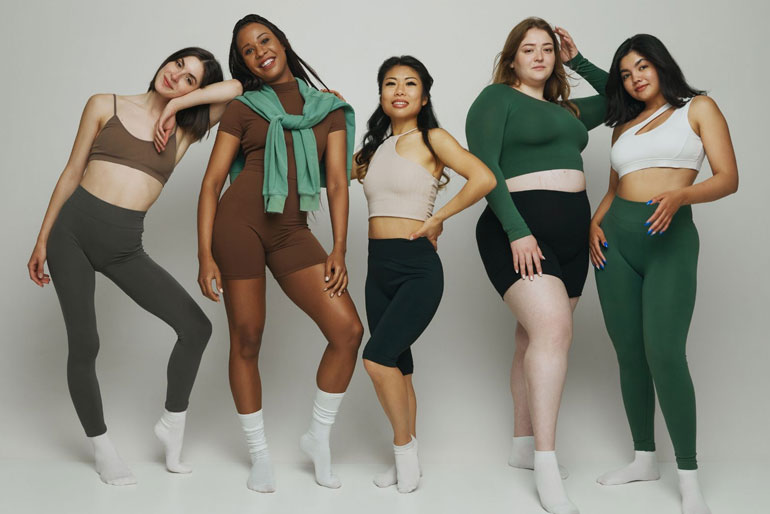
First, Let’s Kill the Myth That Body Types Are About Size
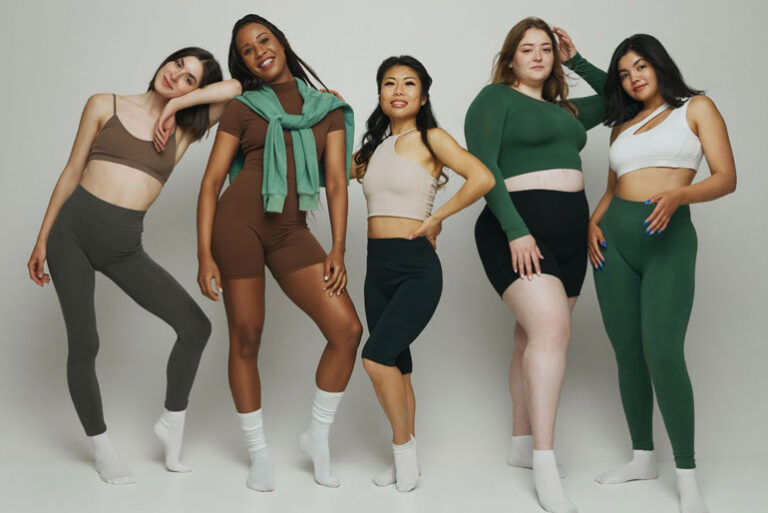
Before anything else — body typing has nothing to do with whether you’re a size 4 or a size 24. It’s purely about proportion: where your body carries width, where it narrows, and how your shoulder-to-hip-to-waist ratio plays out visually.
Two people can be the exact same weight and dress completely differently because one has broader shoulders and the other carries more width in the hips. That’s the whole game.
The Main Body Types (and What They Actually Mean)
Pear (Triangle)
Your hips are noticeably wider than your shoulders. You probably have a smaller bust and a defined waist, but jeans shopping is its own special challenge because what fits your hips is loose at the waist.
What works: A-line skirts that skim over the hips, wide-leg trousers with a fitted top, boat necklines, off-shoulder tops, structured blazers with a bit of shoulder detail. The goal is to add visual weight on top to balance things out.
What doesn’t: Low-rise jeans (they cut across the widest point and make hips read wider), horizontal stripes on the lower half, tapered pants without substantial volume on top.
A real example: I have a friend who’s classic pear-shaped and spent years in skinny jeans and fitted tees because that’s just “what you wear.” She switched to wide-leg pants with a tucked-in blouse, and the difference was genuinely dramatic — not because she changed her body but because the silhouette suddenly made visual sense.
Apple (Round/Oval)
You carry more weight through the middle — your waist isn’t the narrowest part of your torso. Shoulders and hips might be roughly similar in width. You probably have great legs and arms.
What works: Empire waist dresses, V-necks (they draw the eye vertically), wrap tops, high-waisted bottoms when they sit comfortably, flowy layers that skim rather than cling at the midsection, and monochromatic outfits that create a long vertical line.
What doesn’t: Clingy fabrics around the belly, oversized everything (it just adds bulk without definition), and belts cinched at the widest point.
A real example: My cousin is apple-shaped and kept buying empire-waist dresses but in very stiff fabrics. They were poking out rather than draping. The fix was just fabric — switching to jersey or chiffon made the same silhouette actually work.
Hourglass
Your bust and hips are roughly the same width, and your waist is noticeably narrower. This is the body type every ’50s fashion designer had in mind, which means a lot of vintage styles just work.
What works: Anything that defines the waist — wrap dresses, belted coats, fitted blazers, pencil skirts, high-waisted jeans. Basically, you want clothes to follow your natural shape rather than hide it.
What doesn’t: Shapeless shift dresses (they erase your waist entirely), very oversized fits that add bulk without definition, very stiff fabrics that can’t follow your curves.
The surprise: A lot of hourglass-shaped people actually avoid form-fitting clothes because they feel self-conscious about their curves. If that’s you — fitted doesn’t mean tight. There’s a difference between clothes that follow your shape and clothes that squeeze it.
Rectangle (Straight/Banana)
Your shoulders, waist, and hips are all fairly similar in width. You likely have a lean frame and might feel like clothes just hang off you rather than fitting with any shape.
What works: Creating the illusion of curves — peplum tops, ruffles, tiered skirts, cropped jackets with high-waisted bottoms, belts worn at the natural waist even when the outfit doesn’t require it. Texture and pattern add visual interest that a very straight frame can carry beautifully.
What doesn’t: Very clingy minimalist pieces that emphasize the lack of curve (unless that’s the aesthetic you’re going for, in which case — go for it). Anything that falls straight from shoulder to hem without any break.
The lesson I didn’t expect: Rectangle-shaped people can often wear silhouettes that curvier body types struggle with. Super-wide legs, long blazers, structured layers — these look amazing on a straight frame because there’s no conflict between the clothing and the body.
Inverted Triangle
Your shoulders are broader than your hips. You might have a well-defined upper body and slimmer hips and legs. A lot of athletic builds fall here.
What works: Drawing attention to your lower half — A-line skirts, wide-leg trousers, flared jeans, anything with detail or volume at the hem. V-necks work well because they visually narrow the shoulder line. Simple, streamlined tops, bold bottoms.
What doesn’t: Puff sleeves, cold-shoulder tops, boat necks, or anything that adds width at the shoulder. Halter necks can actually work well, despite looking “shoulder-baring,” because they bring the eye to the center rather than the width.
How to Actually Figure Out Your Body Type
Here’s the thing — you don’t need to be obsessive about measuring. But if you want clarity:
- Take a straight-on photo in fitted, neutral clothing. Not a mirror selfie with angles. Just a flat, front-facing photo. It’s easier to see proportion from a photo than in a mirror (mirrors involve a lot of subconscious wishful thinking).
- Look at shoulder width vs. hip width. Are they roughly the same? Is one wider? By how much?
- Look at your waist. Is it clearly narrower than both? Barely narrower? About the same?
- Ignore your weight and focus only on proportion. A size 16 hourglass and a size 8 hourglass follow the same styling principles.
If you want numbers, measure your bust, waist, and hips with a soft tape measure. The ratios will tell you more than any number on a scale ever could.
The Mistakes I See Most Often
Buying clothes that fit the largest part of your body and tailoring nothing. Especially for pear shapes — buying jeans that fit your hips and then having the waist taken in costs maybe $10-15 at a tailor and transforms how everything sits. Most people never do this and then wonder why jeans never fit.
Assuming you have to “balance” your shape into an hourglass. This is the oldest fashion advice in the book and it’s also kind of reductive. Some people look incredible leaning into their natural shape rather than disguising it. If you have wide hips and want to emphasize them — wear a micro mini and a fitted top and ignore the rulebook.
Buying based on how clothes look on the hanger. A-line skirts look kind of boring on a hanger. Wrap dresses look shapeless. Structured blazers look huge. Try it on before you write it off.
Ignoring fabric entirely. The same cut in a stiff cotton vs. a fluid viscose fits like a completely different garment. This matters more than most people realize.
Apps and Tools That Actually Help
If you like a more structured approach, a few things are genuinely useful:
- Google Lens / Pinterest visual search — Find a silhouette you like, search for it, and explore what it looks like on different body types.
- InStyle’s virtual try-on features and similar tools can be hit or miss, but they’re getting better.
- YouTube honestly remains the best resource — search “[your body type] + outfit ideas” and watch real people (not models) trying on clothes. Channels like Erin Elizabeth, YaKara Beverly, and Petite Dressing are genuinely good.
- Stylebook app — lets you catalog your wardrobe and plan outfits. Great for seeing patterns in what you actually reach for vs. what sits in the closet.
One Thing I Wish Someone Had Told Me Earlier
Body typing is a starting point, not a sentence.
The “rules” exist because they often work. But they’re based on what typically flatters, not what you’re allowed to wear. If you’re technically pear-shaped and you love the way you look in straight-leg jeans and a boxy tee — great. Wear exactly that.
The goal isn’t to look like an hourglass. The goal is to feel like yourself in what you’re wearing — and to stop staring in the mirror wondering why something that should work isn’t working.
Once you understand your proportions, even the “wrong” choices become intentional. That’s when getting dressed actually gets fun.
Final Thoughts
Learning your body type isn’t about restriction. It’s about context. When you understand why certain cuts work, you stop guessing and start choosing.
I spent years buying things that were technically fine and wondering why my wardrobe felt like it belonged to someone else. Understanding proportion — not weight, not size, just shape — was the thing that finally made it click.
Start with the photo. Look at your proportions honestly. Find two or three silhouettes that are supposed to work for your shape, try them, and see what happens. Then adjust from there. That’s the whole process.
Nobody gets it perfectly right immediately. But once you see it, you can’t unsee it — and shopping gets a whole lot easier.