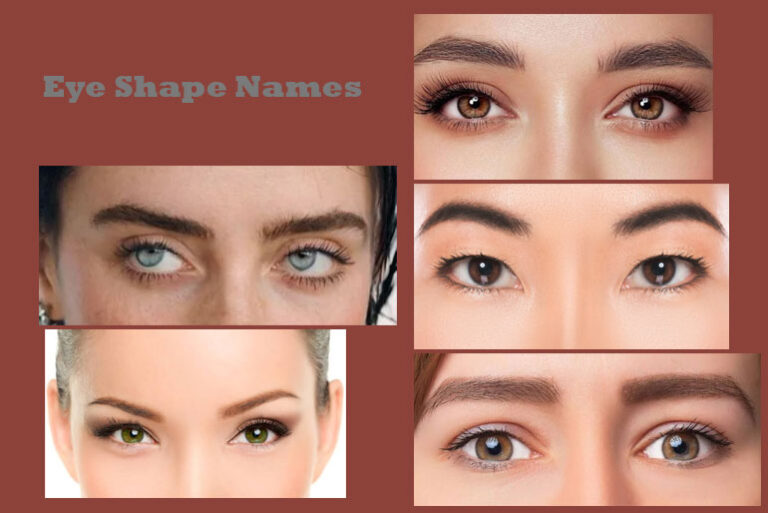
I still remember the day I sat in front of my vanity mirror, YouTube tutorial playing on my phone, brush in hand — and completely froze.
The video kept saying things like “this technique is perfect for almond-shaped eyes” and “if you have hooded lids, skip this step.” I had absolutely no idea which category I fell into. I squinted at the mirror. I stretched my eyes wide open. I even called my sister into the room and made her stare at my face for thirty awkward seconds.
We had no answer.
That was the day I realized most of us go through life never actually learning the name of our own eye shape. And once I did learn — properly — it honestly changed everything. Not just how I applied eyeliner, but how I understood why certain looks never worked on me no matter how carefully I followed along.
So if you’ve ever felt that confusion, this one’s for you.
Why Eye Shape Actually Matters
Before I list every shape and its features, let me be real with you: knowing your eye shape isn’t about putting yourself in a box. It’s about understanding why things work — or don’t.
I spent months copying the same cat-eye tutorial from a beauty influencer who had completely different eye geometry than me. The result on her? Sharp, lifted, stunning. The result on me? A droopy line that made me look tired rather than fierce.
Once I figured out my actual eye shape, I stopped fighting my features and started working with them. My makeup took half the time and looked twice as good.
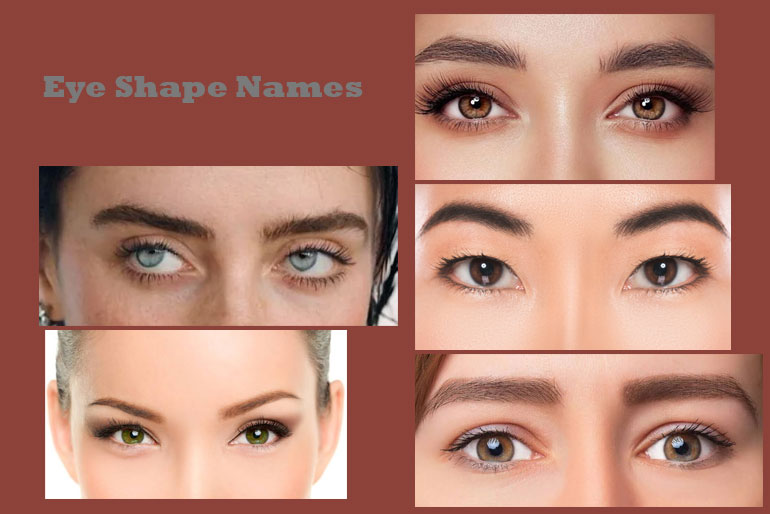
Here’s what each shape actually looks like — and what makes it unique.
1. Almond Eyes
What they look like: The classic “ideal” eye shape that makeup tutorials are almost always designed around. Almond eyes are wider in the middle and taper to a point at both the inner and outer corners. The iris is partially covered by both the upper and lower lids, which creates that soft, elongated look.
Key feature: There’s an equal amount of white visible above and below the iris — not too much, not too little. The outer corner also sits slightly higher than the inner corner.
Who has them: Many people of South Asian, East Asian, Middle Eastern, and Mediterranean backgrounds commonly have this shape. But it shows up across every ethnicity.
The upside: Almost every eyeliner style works. Winged liner, smoky eyes, tight-lining — almond eyes can handle it all. If tutorials don’t specify eye shape, they’re almost certainly designed with almond eyes in mind.
2. Hooded Eyes
What they look like: With hooded eyes, a fold of skin from the brow bone droops down and partially (or fully) covers the mobile lid — that little strip of skin above your lash line where you’d normally apply eyeshadow.
Key feature: When your eyes are open, most of your eyelid crease disappears beneath the skin hood. You might have a gorgeous, defined crease when your eyes are closed, but once they open — it vanishes.
Common mistake I made: I kept blending eyeshadow in the visible crease, not realizing I needed to place it above where my crease actually sits when my eyes are open. Once I learned to apply color higher up, suddenly my eye looks had depth again.
Who has them: Super common — and incredibly common as people age, since skin around the eyes loses elasticity over time. Jennifer Lawrence, Blake Lively, and Taylor Swift all have various degrees of hooded lids.
The upside: Hooded eyes can create a naturally sultry, mysterious look without much effort. You just need to adjust where you apply product.
3. Monolid Eyes
What they look like: A monolid (also called a single eyelid) means there’s no defined crease above the eye. The lid appears as one smooth, flat surface from lash line to brow. There’s no fold.
Key feature: The skin above the eye is flush and continuous, without the inner crease that creates the “double eyelid” appearance common in Western eyes.
Who has them: Predominantly people of East Asian descent — Korean, Japanese, Chinese, Vietnamese, and others — though they appear in various ethnicities.
Important note: For a long time, Western beauty culture dismissed or overlooked monolid eyes, designing almost zero tutorials for them. That’s changing, thankfully. Monolids are stunning and suit bold, graphic liner, dramatic bottom lash looks, and full-lid shimmer applications beautifully.
The upside: Monolids actually display eyeshadow extremely well once you learn the right placement. A wash of color across the entire lid with a defined lash line can look incredibly striking.
4. Round Eyes
What they look like: Round eyes are — you guessed it — circular. There’s visible white (called sclera) above or below the iris when looking straight forward. The eye opens wide and the pupil appears fully encircled with color.
Key feature: The corners don’t have a strong upward or downward tilt. There’s a lot of visible lid space, and the eye appears large and open.
Who has them: Round eyes are associated with a youthful, doll-like appearance. Zooey Deschanel and Emma Stone are often cited as examples.
Common challenge: Because round eyes are already wide and circular, techniques that add more roundness (like heavy bottom liner in the center) can make them look a bit bug-like. The goal is usually to add length and some angularity.
What works well: A winged liner extending slightly outward at the corner elongates the shape. Eyeshadow darker at the outer corners creates an almond illusion.
5. Upturned Eyes
What they look like: The outer corner of the eye sits higher than the inner corner, creating a natural lift. Think of a cat’s eye — that’s the upturned effect.
Key feature: The outer corner visibly points upward compared to where the inner corner sits. Even without liner, the eye has a naturally “winged” or feline look.
Who has them: Often associated with East Asian eye shapes, though it appears across ethnicities. Angelina Jolie has a slightly upturned shape.
What works well: Almost any liner technique looks elegant. Cat-eye wings look especially natural. Tightlining the upper waterline enhances the lift.
Potential challenge: Heavy lower lash line liner can drag the eye shape downward, fighting the natural upward tilt. Light-handed application on the bottom is usually more flattering.
6. Downturned Eyes
What they look like: The opposite of upturned — the outer corner sits lower than the inner corner, which can create a gentle, slightly droopy appearance. It gives eyes a soft, melancholy, or romantic quality.
Key feature: If you draw an invisible horizontal line through the center of your eye, the outer corner dips below it.
Who has them: Anne Hathaway and Carey Mulligan are famous examples.
Common mistake: Over-applying liner on the lower outer corner, which emphasizes the downward tilt even more.
What works well: Winging liner upward at the outer corner works wonders — it visually lifts the eye. Keeping the lower liner minimal or absent at the outer corner balances everything beautifully.
7. Wide-Set Eyes
What they look like: Wide-set eyes have more than one eye’s width of space between them. The bridge of the nose appears broader, and the eyes sit further apart on the face.
Key feature: If you measured the space between your eyes, it would be wider than the width of one eye.
What works well: Darker or more dramatic inner corner shadow draws attention inward, visually closing the gap. Liner applied slightly past the inner corner (toward the nose bridge) also helps.
8. Close-Set Eyes
What they look like: The opposite — less than one eye’s width of space between them. The eyes sit close to the nose bridge, which can make the nose appear narrower as well.
Key feature: The inner corners are close together, sometimes with very little visible skin between them.
What works well: Highlighting the inner corner with a light shimmer creates the illusion of more space. Keeping dark shadow away from the inner corners and concentrating it on the outer two-thirds of the lid adds the appearance of width.
9. Deep-Set Eyes
What they look like: Deep-set eyes are set further back into the skull, creating a prominent brow bone that casts a slight shadow over the eye. The brow bone protrudes forward, making the eyes appear recessed.
Key feature: The brow bone is the most forward-projecting feature of the eye area — the eye itself feels “back” in the socket.
Who has them: Deep-set eyes are common in people of Northern European ancestry. Orlando Bloom and Tom Hiddleston are often cited as examples.
Challenge: Heavy dark lids can make deep-set eyes appear even more recessed. Light shimmer on the lid actually brings them forward visually.
What works well: Light to medium shimmer across the lid, with darker color reserved for the outer corner only. Avoid heavy brow bone highlighting, as it can overemphasize the already prominent brow.
10. Protruding Eyes
What they look like: Also called prominent eyes, these appear to project outward from the eye socket. There’s a lot of lid space visible, and the eyes have a rounded, forward-facing appearance.
Key feature: The eyeball projects outward from the orbit, giving the eye an open, full appearance. This is often paired with a less prominent brow bone.
What works well: Deeper shades on the lid and into the crease create the illusion of depth. Darker liner on the upper lid (particularly in the middle) can minimize the forward projection. Avoid heavy lower liner, which draws more attention to the fullness.
How to Actually Figure Out Your Eye Shape
Here’s the simple method I wish someone had walked me through years ago:
Stand in front of a well-lit mirror — natural daylight is best. Relax your face completely. No squinting, no wide-eyed staring. Just your normal, neutral expression.
Now ask yourself these questions in order:
Is there a visible crease above your lash line when your eyes are open? If no — you likely have a monolid. If the crease is there when closed but disappears when open — that’s a hooded eye.
Where does your outer corner sit compared to your inner corner? Imagine a straight horizontal line crossing the center of your eye. Does the outer corner go up, stay level, or dip below that line? That tells you if you’re upturned, almond/round, or downturned.
How much white (sclera) is visible? If you see white above and below your iris — round eyes. If the iris touches both top and bottom lids — almond or downturned.
How far back do your eyes sit? If your brow bone casts a shadow over your eye — deep-set. If your eye seems to project forward — protruding.
Most people have a combination of characteristics. You might have almond-shaped eyes that are also slightly downturned, or round eyes that are also deep-set. That’s completely normal, and it just means you mix techniques from multiple categories.
The Mistake Almost Everyone Makes
Looking up your “celebrity eye shape twin” and assuming everything that works on them will work on you.
Eye shape is one factor — but face shape, skin texture, lid color, brow position, and personal style all play a role. Use celebrity examples as a starting point, not a blueprint.
The better approach: once you’ve identified your shape, search specifically for tutorials from creators who share your eye shape. The beauty community on YouTube and TikTok has gotten significantly better at diverse representation. Search “hooded eye liner tutorial” or “monolid smoky eye” and you’ll find people who’ve worked through exactly the same challenges you face.
Apps like YouCam Makeup can also let you virtually try looks before committing, which is genuinely useful for experimenting with liner placement without wasting product.
Final Thoughts
Figuring out your eye shape isn’t a vanity exercise — it’s a practical tool. Once I stopped blindly following universal tutorials and started looking for techniques tailored to my actual eye geometry, everything clicked. Looks I’d given up on suddenly became achievable. Products I’d written off turned out to be perfect for me when applied correctly.
Your eyes are genuinely one of your most individual features. Understanding their shape is just understanding yourself a little better.
And once you do? The mirror stops being frustrating and starts being fun.