
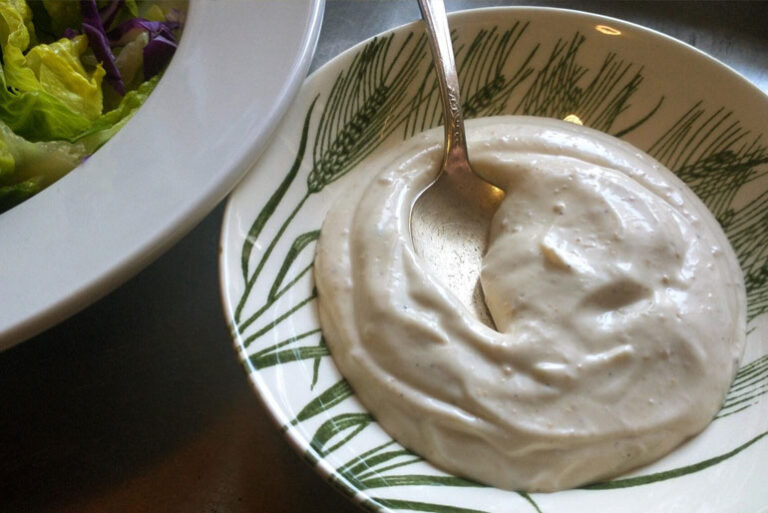
There’s a specific kind of disappointment that hits when you’re proud of a salad — gorgeous greens, roasted veggies, perfectly sliced avocado — and then you ruin it with a sad, watery bottle of dressing from the back of the fridge.
That happened to me more times than I care to admit. I’d spend 20 minutes putting together a beautiful bowl and then drown it in something that tasted like vinegar and regret.
The turning point was when I visited a friend who threw together a homemade ranch in about three minutes, poured it over a basic romaine salad, and made me feel like I was eating at a restaurant. I asked her how, she shrugged and said, “It’s just mayo and a few things.” That was it. That was the wake-up call.
I’ve been making my own creamy dressings ever since — and I genuinely don’t buy bottled anymore. Here are the six I keep coming back to, plus the mistakes I made figuring them out.
Why Homemade Creamy Dressings Are Worth It
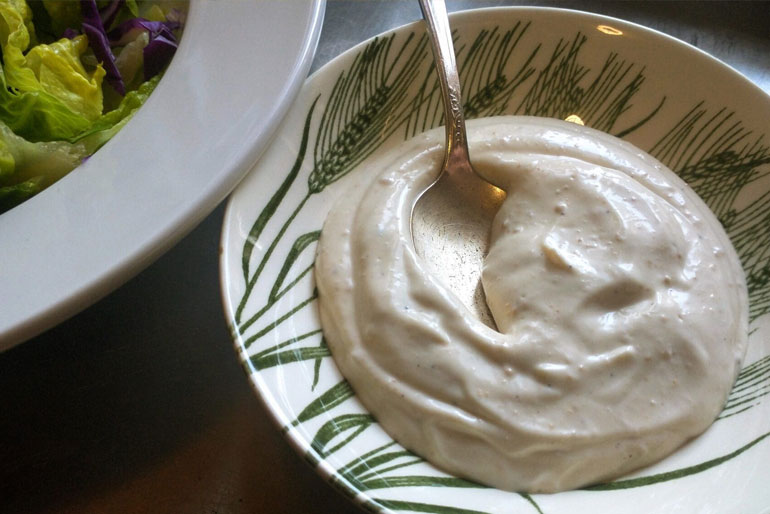
Let me be straight with you: the store-bought stuff isn’t bad. It’s convenient. But once you realize that most creamy dressings take under five minutes and use ingredients you already have, the bottle starts feeling a little pointless.
Here’s what you get when you make your own:
- Control over ingredients — no weird preservatives, no high-fructose corn syrup hiding in your “healthy” Caesar
- Freshness that actually tastes different — it’s hard to describe until you’ve had it side by side
- Customization — want it tangier? More garlicky? Done. The bottle can’t do that.
The biggest mistake beginners make (I made it too) is over-complicating it. You don’t need a blender, a fancy emulsifier, or any special technique. A bowl and a whisk — or honestly, just a fork — does the job for almost all of these.
The Base Ingredients You’ll Use Over and Over
Before I share the recipes, here’s what I always keep on hand, because they appear in almost every creamy dressing:
- Mayonnaise — full-fat is the move. Low-fat tends to break or taste off when you add acid.
- Greek yogurt — a lighter alternative or a blend with mayo
- Sour cream — adds a slightly tangier, richer profile than yogurt
- Lemon juice or white wine vinegar — the acid that makes everything pop
- Garlic — fresh minced is better than powder, but powder works in a pinch
- Salt and black pepper — always. People forget salt in dressings and then wonder why it tastes flat.
- Dijon mustard — a small amount adds depth and helps emulsify
Alright, let’s get into it.
Recipe 1: Classic Ranch (The One That Started It All)
This is the one my friend made. Simple, fast, legitimately delicious.
Ingredients:
- ½ cup mayonnaise
- ¼ cup sour cream
- 2 tablespoons buttermilk (or regular milk with a drop of vinegar)
- 1 teaspoon dried dill
- 1 teaspoon garlic powder
- ½ teaspoon onion powder
- Salt and pepper to taste
- 1 tablespoon fresh chives, chopped (optional but really good)
How to make it:
- Whisk together the mayo and sour cream in a bowl until smooth.
- Add the buttermilk and mix — this loosens it up. Add more if you want it thinner.
- Stir in the dill, garlic powder, onion powder, salt, and pepper.
- Taste it. Adjust. Add more dill if you want that herby punch.
- Fold in chives if using, then refrigerate for at least 15 minutes before serving.
Pro tip: This gets better after sitting overnight. If you have time, make it the day before.
Mistake I made: I once skipped the buttermilk and added lemon juice instead. It tasted fine but the consistency was too thick for drizzling. Stick with a liquid dairy element — it really does matter.
Recipe 2: Lemon Tahini Dressing
I know, I know — this one’s technically more Middle Eastern than “creamy ranch” territory, but tahini is extremely creamy and it’s one of my most-used dressings on everything from roasted cauliflower salads to grain bowls.
Ingredients:
- 3 tablespoons tahini
- 2 tablespoons lemon juice (fresh, please)
- 1 small garlic clove, minced or grated
- 2–3 tablespoons warm water
- Salt to taste
- Optional: ¼ teaspoon cumin for depth
How to make it:
- Add tahini and lemon juice to a bowl — it’ll seize up and look weird. Don’t panic.
- Add the garlic and a pinch of salt.
- Slowly add warm water, one tablespoon at a time, whisking as you go. It’ll loosen into a silky, pourable consistency.
- Taste, adjust lemon and salt, add cumin if using.
This takes about three minutes and tastes like it came from a proper Mediterranean restaurant.
Mistake I made: Using cold water the first time. The tahini seized even more and got almost paste-like. Always use warm water.
Recipe 3: Avocado Lime Dressing
This one is ridiculously good. It tastes indulgent but it’s actually packed with healthy fats.
Ingredients:
- 1 ripe avocado
- Juice of 1 lime
- 1 garlic clove
- 2 tablespoons Greek yogurt
- 2–4 tablespoons water
- Salt, pepper, fresh cilantro (optional)
How to make it:
- Blend everything together. A small blender or food processor works great here — this is the one recipe where I’d recommend it.
- Add water gradually until it’s the consistency you want — thicker for a dip, thinner for drizzling.
- Taste and adjust lime juice and salt.
Tip: Make this right before serving. Avocado browns quickly, even with the lime juice. I learned this the hard way after making a batch the night before a gathering.
Recipe 4: Blue Cheese Dressing
This one’s for the bold. Real blue cheese dressing is a totally different creature from the watery stuff in bottles.
Ingredients:
- ½ cup mayonnaise
- ¼ cup sour cream
- 2 tablespoons buttermilk
- ½ cup blue cheese crumbles (good ones — get Gorgonzola or a real Roquefort if you can)
- 1 teaspoon white wine vinegar
- Salt and pepper
- Fresh chives
How to make it:
- Whisk mayo, sour cream, and buttermilk together.
- Stir in most of the blue cheese, smashing some of the crumbles as you go — you want chunks but also creaminess.
- Add vinegar, salt, and pepper.
- Leave remaining blue cheese crumbles whole and fold in at the end for texture.
- Refrigerate for 30 minutes before serving if you can.
Mistake I made: Using pre-shredded blue cheese from a bag. It’s drier and doesn’t melt into the dressing the same way. Buy a block and crumble it yourself.
Recipe 5: Caesar Dressing (The Real Way)
Traditional Caesar calls for raw egg yolk and anchovy paste. I know people get nervous about the raw egg, but this is how it’s actually supposed to taste — rich, savory, slightly funky in the best way.
If you’re uncomfortable with raw egg, use a tablespoon of mayonnaise instead. It’s a perfectly reasonable swap.
Ingredients:
- 1 egg yolk (or 1 tbsp mayonnaise)
- 2 garlic cloves, minced or pressed
- 1 teaspoon anchovy paste (or 2–3 anchovy fillets, mashed)
- 2 tablespoons lemon juice
- 1 teaspoon Dijon mustard
- ¼ cup olive oil
- ¼ cup Parmesan, finely grated
- Salt and pepper
How to make it:
- Whisk together egg yolk (or mayo), garlic, anchovy paste, lemon juice, and mustard.
- While whisking constantly, slowly drizzle in the olive oil. Go slow — this creates the emulsion that makes it creamy.
- Stir in Parmesan, season with salt and pepper.
- Taste. If it needs more zing, add more lemon. More savory? More Parmesan.
Pro tip: Use the flat side of your knife to smash and scrape the anchovy fillets into a paste if you’re not using the tube. It integrates better.
Mistake I made: Pouring the olive oil too fast the first time. The dressing broke and turned greasy and separated. Slow and steady really is the rule here.
Recipe 6: Honey Mustard Dressing
The most universally loved dressing in my household. Kids, picky eaters, everyone goes back for more.
Ingredients:
- 3 tablespoons mayonnaise
- 2 tablespoons Dijon mustard
- 1 tablespoon honey
- 1 tablespoon apple cider vinegar
- Salt and pepper
How to make it:
- Whisk everything together. That’s it. Seriously.
- Taste and adjust — more honey if you want sweeter, more vinegar for tang.
- Done in under two minutes.
This one doubles as a dipping sauce for chicken tenders, a sandwich spread, or a dip for veggies. It’s basically a kitchen utility player.
Common Mistakes That Ruin Homemade Dressings
I’ve made most of these — learn from them:
1. Not tasting as you go. Dressings need adjustment. Always taste before serving and ask yourself: does it need more acid? More salt? More something?
2. Skipping the salt. This is the silent killer of dressings. A dressing that tastes bland almost always just needs salt.
3. Making too much. Unlike bottled dressings, homemade ones don’t have preservatives. Most last 5–7 days in the fridge. I used to make big batches and then feel obligated to eat salad every single day.
4. Dressing the salad too early. Even the creamiest dressing will make greens soggy if you add it too far in advance. Dress right before you eat.
5. Using bad ingredients and expecting great results. A cheap, watery lemon won’t give you the brightness that a good fresh one does. Buy decent olive oil. Get real Parmesan. The dressing is simple enough that ingredient quality really shows.
A Few Final Notes From My Kitchen
The thing I love most about these recipes is how forgiving they are once you understand the balance: fat (mayo/yogurt/avocado) + acid (lemon/vinegar) + seasoning (salt, garlic, herbs) = a great dressing almost every time.
After making these for a while, I started riffing. I added sriracha to the ranch. I threw fresh basil into the Caesar. I mixed leftover blue cheese dressing with avocado and lime for some kind of chaotic fusion situation that was actually incredible.
That’s the real win with homemade — you start with a recipe, and eventually you just start cooking, adjusting by feel and taste. The bottle in the fridge doesn’t give you that.
Give at least one of these a try this week. Start with the honey mustard if you want zero risk. Work up to the Caesar when you’re feeling adventurous. And the next time someone compliments your salad, smile and say it’s homemade — because technically, all the work was in the dressing.